

Dessert Cup Size Guide: 30ml, 60ml, 100ml, 160ml or 250ml?

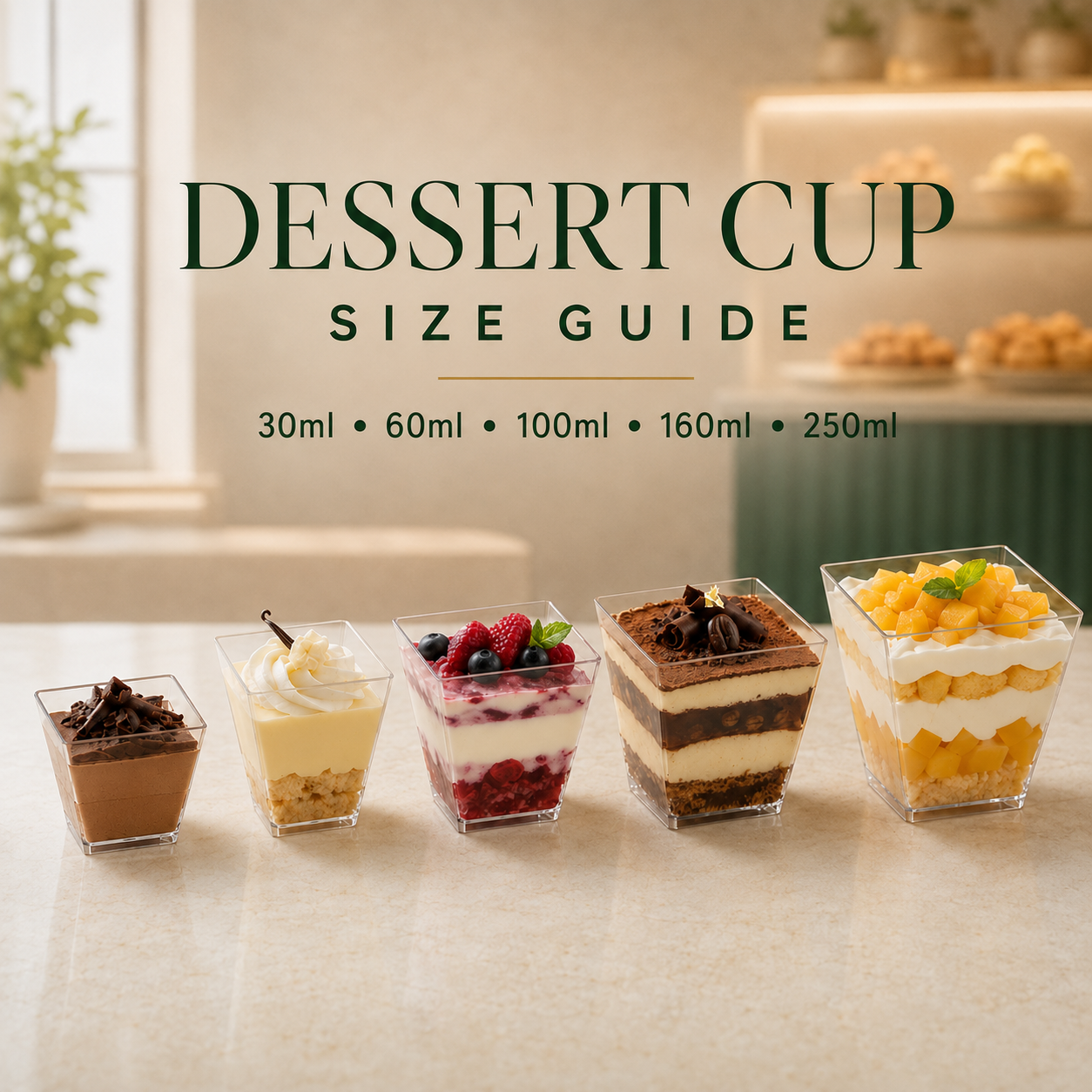

Choosing between 30ml, 60ml, 100ml, 160ml and 250ml dessert cups can feel confusing. This dessert cup size guide gives you the short answer: use 30ml for one-bite samples, 60ml for tastings, 100ml for regular individual desserts, 160ml for generous party servings and 250ml for large or takeaway-style desserts. However, also consider richness, toppings, cup shape and the rest of the menu. Whether you run a bakery or plan a celebration at home, this guide will help you choose confidently.
Dessert cup sizes at a glance
| Cup capacity | Best suited to | Typical dessert ideas | Portion style |
|---|---|---|---|
| 30ml | Samples, one-bite servings and multi-dessert menus | Mithai bites, chocolate ganache, mini phirni, dessert sauces | Petite tasting portion |
| 60ml | Dessert tables, buffets and tasting portions | Mousse, mini cheesecake, pudding, tiramisu, fruit cream | Small individual portion |
| 100ml | Bakeries, cafés, home orders and standard party desserts | Layered mousse, shrikhand, kheer, parfait, panna cotta | Standard individual portion |
| 160ml | Weddings, birthdays and fuller standalone servings | Sundae, fruit custard, falooda-style dessert, generous mousse | Generous individual portion |
| 250ml | Premium takeaway desserts and large servings | Loaded parfait, layered cake dessert, fruit-and-cream cup | Large or shareable portion |
Treat this table as a starting point. A dense chocolate mousse feels satisfying in a smaller cup, while a light fruit custard may need more volume. Likewise, a tall narrow cup and a wide shallow bowl can hold the same amount but create very different visual impressions.
Why does the right dessert cup size matter?
The right size helps the dessert look complete, keeps food costing predictable and improves the eating experience. An underfilled 160ml cup can look poor, while an overloaded 60ml cup may smear the topping. Meanwhile, a consistent fill line helps bakeries and caterers calculate ingredients for weddings, corporate functions and festive orders. Therefore, match the recipe to the container and leave some headspace for garnish, a lid and safe handling.
What are 30ml dessert cups best for?
A 30ml cup holds roughly two tablespoons, so treat it as a tasting vessel rather than a full portion. It works especially well when guests will try several sweets. Use it for chocolate pots, mini phirni, truffle bites, shrikhand, sauces, bite-sized appetisers or bakery samples.
Navin Plast’s N-44 30ml transparent dessert bowl offers a crystal-clear, shallow format that keeps small portions visible. However, avoid 30ml for a standalone dessert unless the recipe is rich or intentionally petite.
Choose 30ml when: the menu contains multiple desserts, you need controlled samples, or the sweet delivers strong flavour in one or two bites.
Is 60ml enough for tasting portions?
Yes. A 60ml dessert cup gives you enough room for two or three visible layers while keeping the serving light. It often works better than 30ml for mousse because it holds a base, mousse and small garnish. Use it for mini tiramisu, cheesecake, pudding, fruit cream or custard, especially at children’s parties and events with a long menu.
For a geometric presentation, the N-3 60ml triangle mousse cup creates an attractive tasting format. For a softer, glass-like profile, the N-12 60ml small dessert cup provides another option. You can explore more shapes in Navin Plast’s mousse cup collection.
Choose 60ml when: you want a true tasting portion, plan a dessert table, serve children or expect guests to sample more than one sweet.
Is 100ml the best all-round dessert cup size?
For many bakeries and home dessert businesses, yes. A 100ml cup sits between a sampler and a heavy serving, so it works for events and everyday orders. Depending on the recipe, it can hold two to four neat layers: biscuit crumb, mousse and ganache; sponge, cream and fruit; or kheer finished with nuts.
The N-20 100ml transparent mini bowl suits mousse, cake desserts and similar presentations. Before placing a bulk order, fill, chill and garnish one test cup. This trial quickly reveals whether the shape offers enough headspace and visual balance.
Choose 100ml when: you need a dependable single-serving size for bakery counters, party orders, café desserts or home delivery menus.
When should you choose a 160ml dessert cup?
A 160ml cup creates a noticeably fuller serving. Choose it when dessert acts as the main finale rather than one option among many. It suits fruit custard, jelly-and-cream layers, sundaes, parfaits and airy mousse. Nevertheless, richness matters: 160ml of dense ganache may feel excessive, while the same amount of light mousse can feel balanced.
Navin Plast’s N-25 160ml square mousse cup combines a crystal-clear finish with a modern square shape. Its wider format can highlight distinct layers and toppings at a buffet or dessert counter. If your recipe needs a lid or taller clearance, compare the shape and closure before you choose purely by volume.
Choose 160ml when: guests will have one primary dessert, the recipe feels light, or the visual presentation needs more room.
What are 250ml dessert cups or boxes suitable for?
A 250ml container holds a large dessert. It suits loaded parfaits, fruit-and-cream combinations, layered cake desserts and premium takeaway portions. It rarely makes sense for tasting menus or multi-dessert wedding buffets. Instead, use it when the dessert is the hero or contains chunky brownie, fruit, jelly, cake or ice cream layers.
For packed desserts, a container with a lid usually makes more sense than an open cup. The N-54 250ml round dessert box with lid supports larger layered presentations and easier handling. For more help with professional packs, read Navin Plast’s guide to choosing pudding cups for dessert packaging.
Choose 250ml when: you sell a large standalone dessert, need room for chunky layers or want a premium takeaway presentation.
What size cup is best for mousse?
For most mousse servings, choose 60ml for tastings, 100ml for a regular individual portion and 160ml for a generous standalone dessert. A 30ml cup suits an intense tasting bite, while 250ml works only for a large loaded mousse or sharing-style product.
Dense dark chocolate mousse satisfies quickly, so 60–100ml usually works. A lighter fruit or whipped mousse may suit 100–160ml. Also account for the base and garnish because crumb, sponge, sauce and fruit consume usable capacity. Finally, compare shapes in the Navin Plast dessert and mousse cup range: tall cups showcase layers, while wide cups create more topping area.
What dessert cup capacity is suitable for parties?
For most parties, 60ml or 100ml offers the safest choice. Select 60ml when the menu includes several starters, a full meal and multiple sweets. Move to 100ml when you want one satisfying individual dessert. Choose 160ml when dessert is the main finale or when you serve light recipes such as fruit custard and parfait.
You can estimate quantity with a simple formula:
Number of cups = expected guests × servings per guest + 5–10% buffer
For example, 100 guests receiving one dessert would require 105–110 cups. If you plan three 30ml tastings per guest, start with 300 portions and then add the buffer. Adjust for self-service, children and whether guests can return for seconds.
How do you choose the right cup beyond capacity?
Before buying, check five practical details:
- Dessert density: Rich desserts need less volume; airy desserts can use more.
- Layers and garnish: Choose enough height and headspace for the finished recipe.
- Shape: Tall cups emphasise layers, while wide bowls showcase toppings.
- Service method: Open buffet service, plated dining and delivery have different handling needs.
- Order volume: Standardise one or two sizes if you want simpler preparation and inventory.
Whenever possible, run a real fill test. Water confirms capacity, but only the finished recipe confirms appearance, spoon access and stability.
Why consider Navin Plast dessert cups?
Navin Plast offers crystal-clear, food-grade PS dessert cups, mousse cups, bowls and lidded dessert boxes for homes, bakeries, cafés, cloud kitchens, caterers and event planners across India. With petite bowls, geometric mousse cups and larger boxes, buyers can match the pack to the recipe. Customers can wash and reuse many designs when their condition and care instructions allow. You can also explore bakery packaging boxes for cakes, pastries and desserts and learn how transparent dessert boxes can strengthen presentation.
Final answer: which dessert cup size should you buy?
Choose 30ml for one-bite samples, 60ml for tastings, 100ml for the most versatile individual serving, 160ml for a generous party dessert and 250ml for large or packed creations. When unsure, start with 100ml, then move down for richer or multi-dessert menus and up for lighter, loaded desserts. Most importantly, test the actual recipe before ordering at scale.
Frequently asked questions about dessert cup sizes
1. Is 60ml enough for a mousse cup?
Yes. A 60ml cup works well for a mousse tasting portion, mini dessert table or menu with several sweets. For a regular individual mousse, 100ml may feel more satisfying.
2. How many ounces is a 60ml dessert cup?
Sixty millilitres equals approximately 2 US fluid ounces. Likewise, 30ml is about 1 ounce, 100ml about 3.4 ounces, 160ml about 5.4 ounces and 250ml about 8.5 ounces.
3. What is the standard dessert cup size?
There is no single universal standard. However, 100ml works as a practical all-round individual size for many mousses, puddings, kheer portions and layered desserts.
4. Which dessert cup size is best for weddings?
Choose 30–60ml when the wedding menu includes several sweets. Choose 100ml when each guest receives one portion. Use 160ml only for a generous main dessert.
5. What size dessert cup should I use for children?
A 60ml cup usually suits children’s parties and helps control spills and waste. For fruit custard or ice cream with toppings, 100ml may work better.
6. What size is best for pudding or panna cotta?
Use 60ml for tasting portions, 100ml for standard servings and 160ml for a fuller restaurant-style portion. Let richness and garnish determine the final choice.
7. Can I fill a dessert cup completely to the top?
Avoid filling it to the brim. Leave enough headspace for garnish, handling and a lid where required. A small gap also reduces smearing and overflow.
8. How many dessert cups should I order for a party?
Multiply the guest count by the servings planned per person, then add a 5–10% buffer. Increase the quantity when you offer self-service or multiple flavours.
9. Does cup shape change the portion size?
Shape does not change the stated capacity, but it changes how the portion looks and how easily guests can reach the layers. Always test the finished dessert in the selected shape.
10. Is a 250ml dessert cup too large for one person?
It can be. A 250ml size suits loaded, light or premium standalone desserts. For dense mousse, cheesecake or ganache, 100–160ml will often feel more balanced.
