

Best Packaging for Mousse, Tiramisu, Cheesecake and Pudding

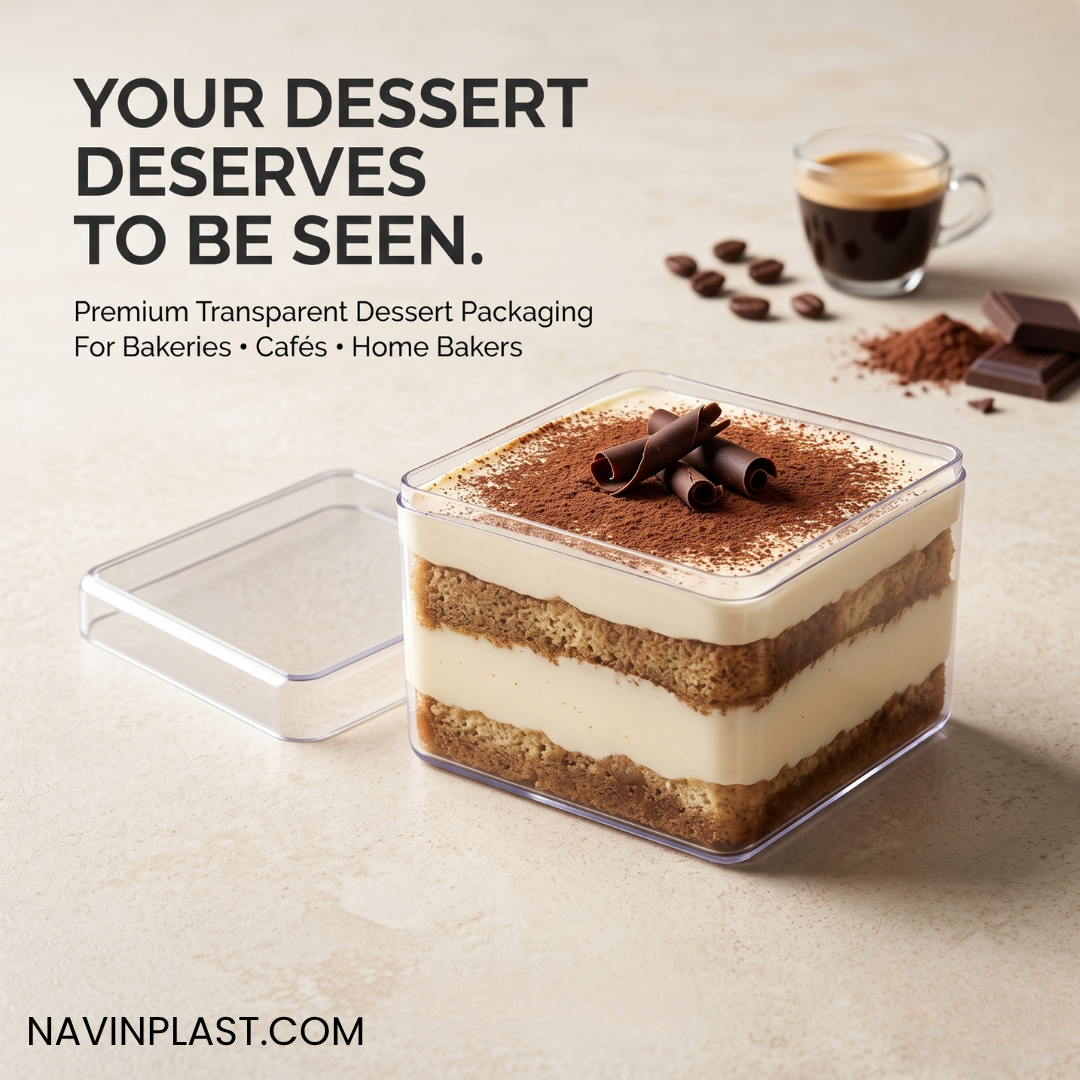
A beautifully made dessert can lose its appeal if the container is too large, the lid touches the topping or the layers become messy during delivery. The best packaging for mousse, tiramisu, cheesecake and pudding must protect the dessert, present it clearly and make handling easier.
That matters whether you prepare ten weekend orders at home or hundreds of portions for a café, restaurant, cloud kitchen or event. The right bakery packaging boxes can make a small brand look polished and a display counter feel more premium.
Quick answer: which dessert container should you choose?
Choose the container according to the dessert’s structure, not just its volume. Mousse and pudding usually suit compact clear cups. Tiramisu benefits from a straight-sided rectangle box that displays its layers. Mini cheesecakes need a rigid base and sufficient lid clearance. For takeaway and delivery, a compatible, secure lid is essential in every format.
| Dessert | Best packaging format | Practical starting size | Feature to prioritise |
|---|---|---|---|
| Mousse | Clear individual cup | 60–100 ml | Space for garnish |
| Tiramisu | Rectangular transparent container | 100–200 ml | Straight sides and secure lid |
| Cheesecake | Rigid cup, mini cake box or slice box | 100–250 ml | Stable base and lid height |
| Pudding | Round or square transparent cup | 80–160 ml | Easy spoon access |
These are starting points, not fixed rules. Recipe richness, toppings and serving occasion should determine the final capacity. See Navin Plast’s dessert cup size guide for a 30–250 ml comparison.
Why dessert-specific packaging matters
These desserts may share a chilled display, but they behave differently. Mousse is easily marked, tiramisu has moist layers, cheesecake can shift as one piece, and pudding needs comfortable spoon access.
A general food box may hold each dessert, but a purpose-selected transparent container presents it better. Clear walls reveal layers and toppings before opening, while a close fit limits movement.
Best packaging for mousse
Mousse looks best when its smooth texture and contrasting layers remain visible. A crystal-clear, compact cup adds height and makes even simple chocolate mousse feel special. Browse plastic mousse cups in different shapes.
For tasting menus, dessert tables and return gifts, a 60 ml transparent cup can be enough for a biscuit base, mousse and a small garnish. A 100 ml format suits a regular individual portion, while 160 ml works for generous servings, multiple layers or elaborate toppings.
Leave headspace between the dessert and lid. If chocolate curls, whipped cream or fruit touches the top, the customer opens a smeared package. For advance preparation, takeaway or delivery, choose cups with lids and test the complete filled cup—not only the empty packaging.
Best packaging for tiramisu
Tiramisu is all about visible layers: sponge or biscuits, coffee, mascarpone cream and cocoa. A rectangular transparent cake box with straight sides shows this structure more clearly than a wide opaque tub. It also gives the baker room to build neat, even layers and portion consistently.
The box should have a level base, walls firm enough to keep their shape and a lid that closes without pressing the cocoa or cream. The N-53 tiramisu box is one example of a 200 ml rectangular container with a lid for layered desserts. For smaller tasting portions, a 60–100 ml rectangle or square container may be more economical.
Before finalising a box, chill a filled sample for the same duration as a real order. Carry it in the delivery bag, then inspect the corners, lid and top layer for condensation, shifting or contact.
Best packaging for cheesecake
Cheesecake packaging depends on how you sell the dessert. A cheesecake jar or deconstructed cheesecake works well in clear plastic cups with lids. A mini whole cheesecake needs a firm base and a transparent box for cake so the sides and topping remain visible. A slice needs a container shaped to prevent it from sliding into unused space.
For layered cheesecake cups, use straight or gently tapered sides to show the crumb, filling and sauce. For mini cakes, check internal dimensions: the diameter, height and decoration must fit without touching the lid.
A rigid plastic cake box suits takeaway counters, celebration orders and hampers. Add a food-safe cake board when extra support is needed, and test loose sauces during transport.
Best packaging for pudding
Pudding is forgiving, but its container still affects how generous and premium the portion appears. A wide opening improves spoon access, while a clear wall highlights caramel, fruit, chocolate, nuts or layered custard. Round cups feel familiar and comfortable; square cups create a sharper display for bakery shelves and party tables.
An 80–100 ml clear cup suits rich chocolate pudding or a controlled serving. A 120–160 ml cup works for lighter puddings and fruit layers. Compare materials, sizes and closures in the guide to choosing pudding cups.
For delivery, prefer small plastic cups with lids that match correctly rather than combining cups and lids from different ranges. Check every product’s stated specifications before ordering, especially if your process involves freezing, heating or machine washing.
Seven checks before buying dessert packaging
1. Confirm food-contact suitability
Use packaging intended for direct food contact and review its specifications. Avoid choosing cheap disposable plastic food containers on price alone; weak walls or closures can cost more through damaged orders.
2. Match capacity to the recipe
The same 100 ml transparent plastic cup can look full with dense mousse but modest with light pudding. Fill measured samples to your intended line before calculating portions.
3. Measure usable dimensions
Capacity does not reveal cheesecake width or lid clearance. Check internal width, length and height, especially for mini cake boxes, plastic cake containers or rectangular cake packaging.
4. Protect the topping
Allow clearance for cream, berries, chocolate decorations and toppers. A tall lid must still close firmly and remain stable.
5. Test the closure
For delivery, test transparent plastic cups with lids inside the actual bag or carton. Travel over a realistic route and inspect the dessert. Do not claim a container is leakproof unless its specifications and your testing support it.
6. Look at clarity and shape
A high-clarity transparent plastic container makes the dessert the display. Straight walls emphasise layers, curved bowls suit pudding, and geometric cups add interest. A transparent bowl also suits counter service.
7. Consider the full order journey
Packaging should stack before filling and fit your refrigerator, counter and delivery bag. It must also be easy to hold, open and eat from.
Choosing packaging for your type of business
Home bakers: Start with one tasting size and one regular size. A 60 ml cup plus a 100–160 ml cup can cover trial boxes, parties and everyday sales.
Cafés and restaurants: Match the cup to the service method. A transparent plastic bowl suits dine-in presentation, while plastic food containers with lids help with takeaway. Standardise fill lines.
Cloud kitchens: Prioritise closure, stackability and delivery testing. Keep cold desserts away from hot food and limit movement in the carrier.
Caterers: Small plastic cups suit multi-dessert menus. Choose shapes guests can hold while standing, and sample them before ordering bakery boxes wholesale.
Bakeries and dessert brands: Create a simple system: clear cups for mousse and pudding, a rectangular transparent container box for tiramisu and a cake packing box for mini cheesecakes. Consistent shapes help the display feel recognisable.
Common packaging mistakes to avoid
- Choosing an oversized cup that makes the portion look underfilled.
- Filling to the rim and leaving no space for a lid or garnish.
- Assuming every clear container is suitable for freezing, heating or dishwashing.
- Buying plastic containers for food packaging without testing the matching lids.
- Using a shallow bowl for a dessert that needs visible vertical layers.
- Selecting packaging only from online photographs without checking dimensions.
- Placing a premium cheesecake or tiramisu in a flexible box that bends in transit.
- Ordering bulk quantities before running a filled, chilled delivery test.
Search terms such as disposable plastic food containers, disposable plastic cups or use and throw plastic cups are common, but select products according to verified food suitability, performance and the manufacturer’s reuse or disposal guidance. Describe reusable designs accurately.
Build a better dessert experience with Navin Plast
Good packaging should make your dessert easier to sell, carry and enjoy. Navin Plast offers clear dessert cups, cups with lids, transparent cake boxes, bowls and other bakery packaging for home bakers, bakeries, cafés, restaurants, caterers and growing dessert brands.
Start with the dessert, choose a realistic portion, measure the decoration and test a filled sample. Then compare suitable mousse cups, cake boxes and lidded containers. The result is packaging that protects the work you put into every layer—and helps the customer see that care before taking the first bite.
Frequently asked questions
What is the best container for mousse?
A clear 60–100 ml cup suits most individual mousse portions. Show the layers, leave space for garnish and use a compatible lid for takeaway. Large portions may need 160 ml.
What size container is best for tiramisu?
Use 60–100 ml for tastings, 100–200 ml for individual portions and up to 250 ml for loaded servings. Straight-sided rectangles show the layers clearly.
Do mousse and pudding cups need lids?
Lids help protect desserts during refrigeration, takeaway, delivery and advance preparation. Use the lid designed for the selected cup and check its closure after filling.
Can I use the same cup for mousse, cheesecake and pudding?
Yes, if its size, shape and lid clearance suit each recipe. A 100 ml transparent cup may reduce inventory, but test it because cheesecake, mousse and pudding travel differently.
Is a transparent box better for desserts?
A clear container reveals layers, toppings and portion consistency without opening. It must also provide suitable dimensions, stability and closure.
How much headspace should I leave beneath the lid?
There is no universal measurement. Close a decorated test portion and confirm the lid does not touch the garnish during storage or travel. Avoid excessive empty space.
Should a home baker buy dessert packaging wholesale?
Buy samples first. Once a size works across your recipes, refrigerator and delivery process, wholesale can lower the per-piece cost. Confirm quantity, dimensions, lid inclusion and specifications.
What other packaging may a café or restaurant need?
Alongside dessert containers, a food business may need serving plates and drinkware. Keep these requirements separate: a plastic juice glass or small plastic wine cup should be selected for its intended beverage service, while mousse, tiramisu, cheesecake and pudding need purpose-suited dessert packaging.
